When you start working with a new ad network or testing a new type of traffic, finding winning combinations often means running large-scale tests like RON. These tests can include thousands of zones, and a significant portion of them may simply drain your budget before you even identify what works.
To help you run tests faster, optimize more precisely, and reduce unnecessary costs, we’ve rolled out IAB-targeting on Direct Click campaigns. In this guide, we’ll break down how IAB targeting works and walk you through a real RON test case—from launch to optimization and results.
Ready to test smarter? Let’s get started!
What is IAB targeting?
IAB targeting in affiliate marketing is a method to classify websites and online content with the help of standardized content categories defined by the Interactive Advertising Bureau (IAB). For example, if a website is about cooking, it goes under the Hobbies & Interests category, but if it’s a training blog, it belongs to Health & Fitness.
Whenever a website joins our network, we assign it to a specific IAB category based on its content. Affiliates and advertisers can then place their ads in contexts that match these categories so their offers reach a more relevant audience.
Benefits of IAB targeting
- Faster and more efficient testing. In large-scale tests, where thousands of zones are involved, IAB targeting helps you structure traffic from the start. Instead of analyzing everything manually, you can quickly identify which categories perform and which don’t—saving both time and budget.
- Simplified optimization. This is where IAB targeting makes the biggest impact. Rather than optimizing zone by zone, you can manage traffic on a category level. By disabling a single IAB category, you can instantly exclude hundreds of underperforming zones that would otherwise continue draining your budget.
- More precise traffic control. Grouping zones by content allows you to align your campaigns with the most relevant audiences. This leads to cleaner data, clearer insights during testing, and more accurate optimization decisions.
- Higher traffic quality and engagement. By matching ads with relevant content categories, users are more likely to respond to offers that resonate with their interests. However, the real “gold” often lies in unexpected categories, making continuous testing essential.

How IAB categories work within RollerAds
If you haven’t tried our new full-cycle ad platform (currently in open beta), now is the perfect time. IAB category targeting on Direct Click is already available there.
The new RollerAds platform is now live in open beta! We’ve brought together all parts of the affiliate marketing workflow into one place, including our in-house CPA network. Take it for a spin and see what you think!
To help you get started, we’ve put together three detailed guides covering each key area: Campaigns, Sites, and Offers. Dive in, and if you need any help, our team is always there for you. Just use the in-platform chat to reach out (just like in our current platform).
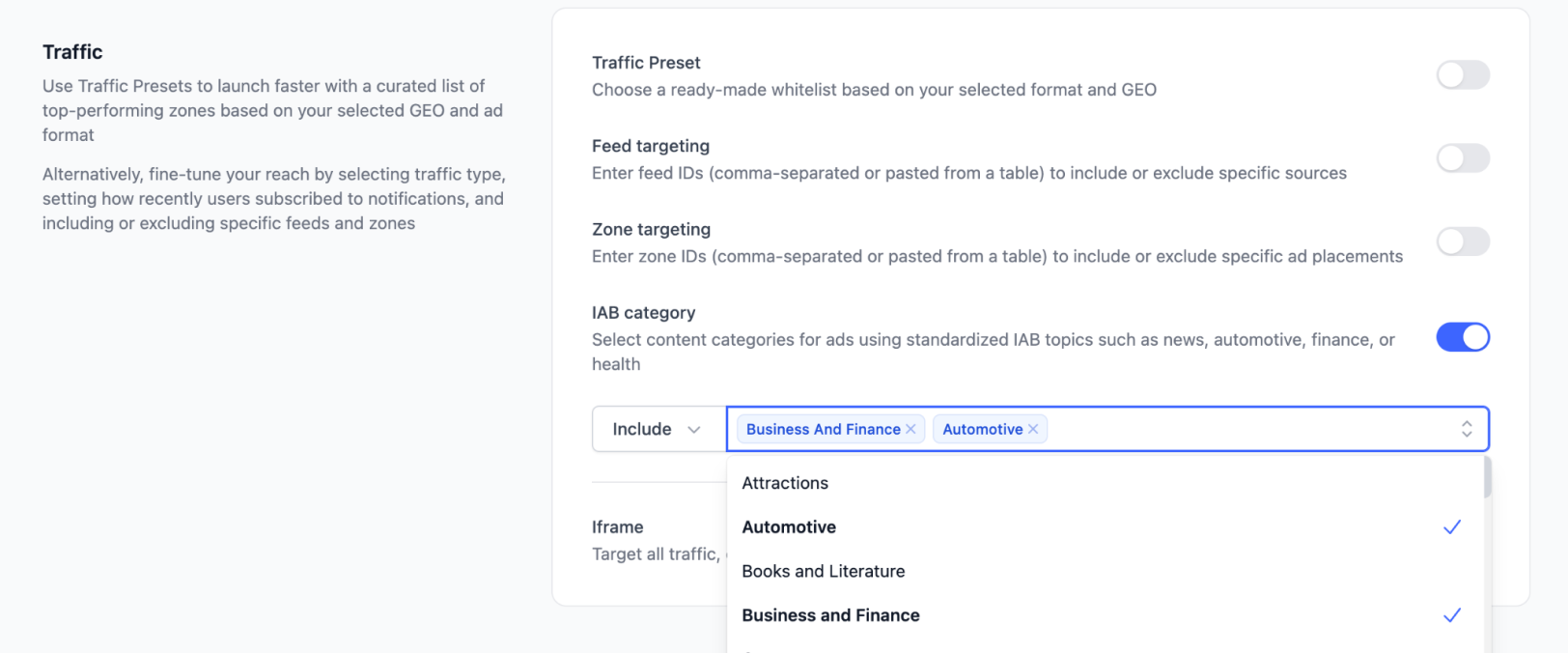
When setting up your campaign, you’ll see the IAB category option in the Traffic section when creating your campaign, letting you select one or multiple categories to make your Direct Click campaigns hit the mark.
Let’s put IAB targeting into practice and see how it simplifies optimization while boosting the efficiency and profitability of your tests.
Case study: RON test with IAB targeting
Now let’s see if IAB targeting works as well in reality as it does in theory. We launched a RON test with 2 similar offers the following setup:
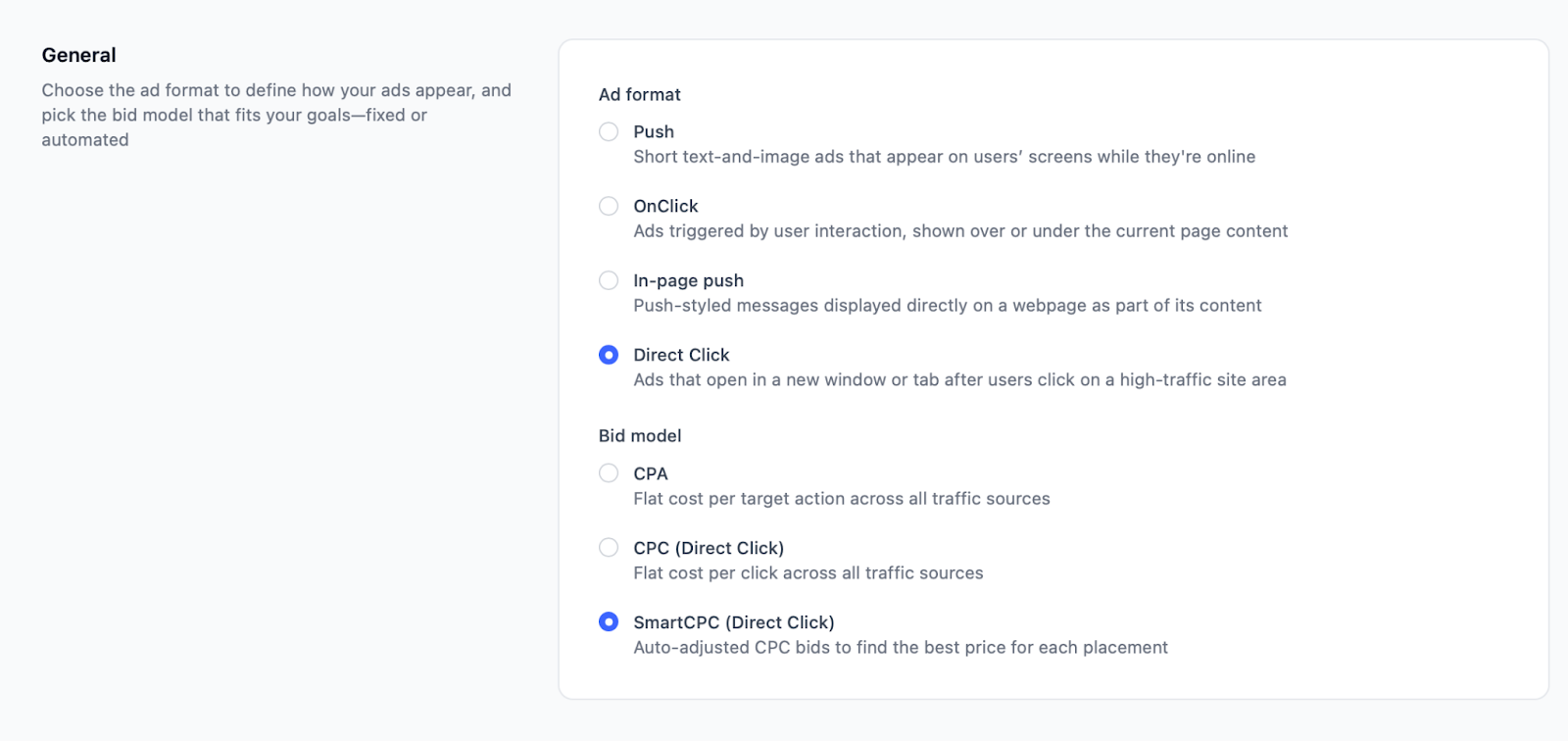
Format: Direct click
Vertical: VPN
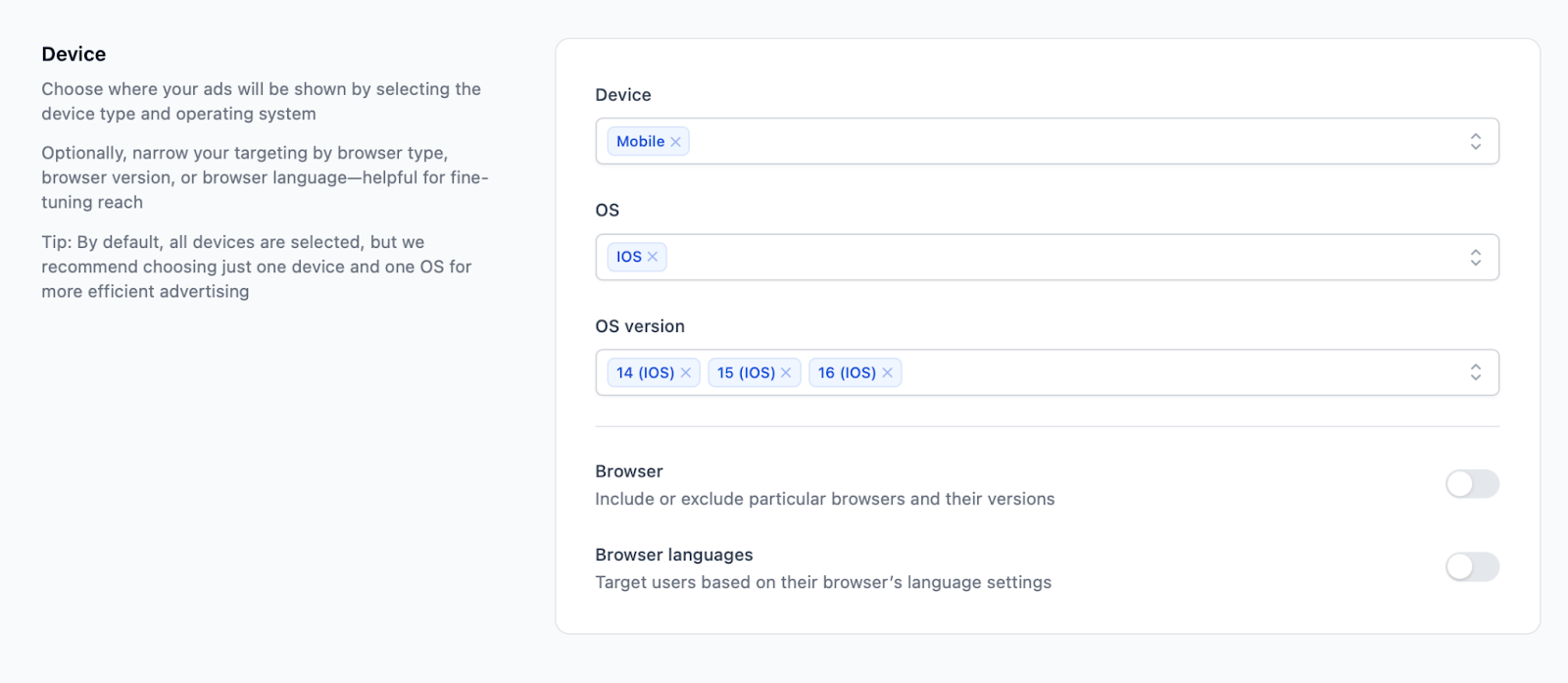
Device: Mobile
OS: iOS
Payout: $20
We recommend testing similar offers within one campaign from time to time—even ones that look identical in the same category, GEO, and OS can perform wildly differently on the same traffic.
We recently ran a deep dive on offer rotation in a Direct Click campaign, highlighting why testing matters and showing exactly how to do it. Check it out if you haven’t seen it yet!
Building the campaign
As we said earlier, IAB targeting is available on our new platform (now live in open beta). So we took it straight for a test run.
Step 1: We selected the ad format and bidding model.
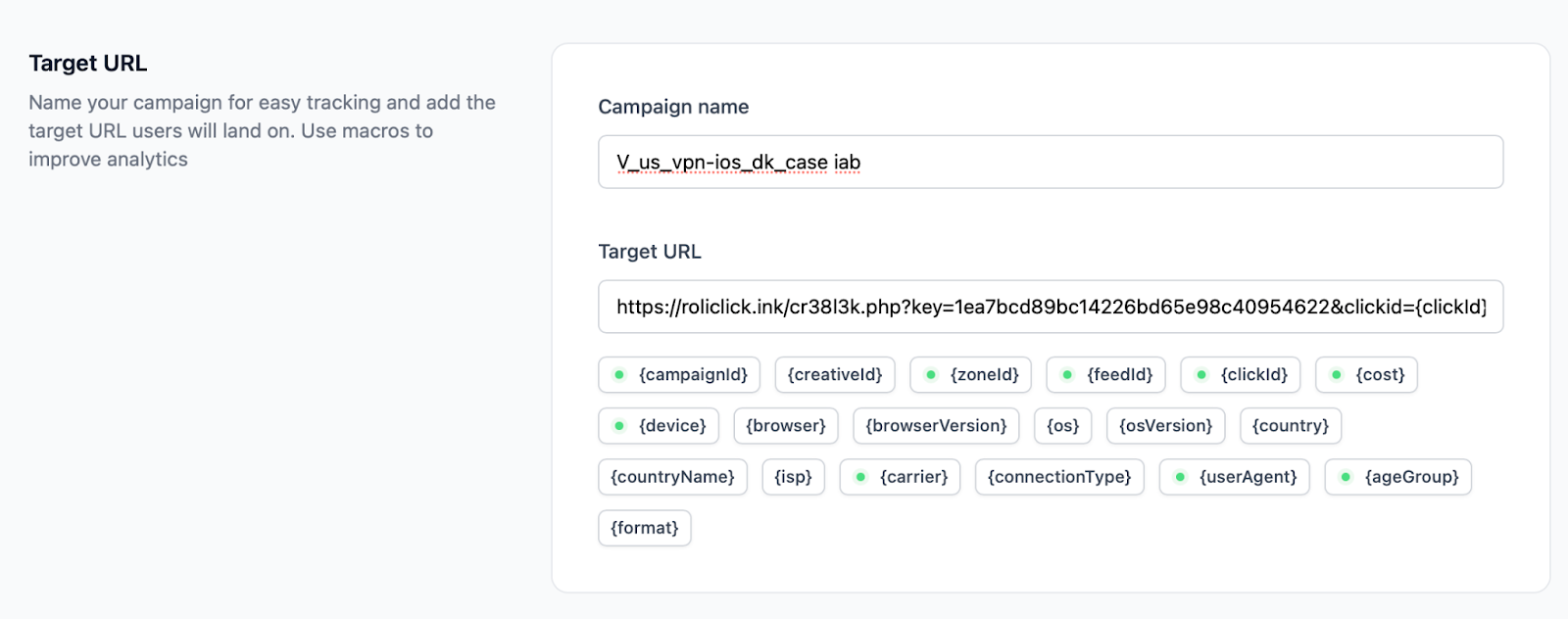
Step 2: We named the campaign and added the target URL.
To ensure IAB categories are passed and trackable, you’ll need to add a macros. Consult your manager to confirm the exact parameters to use.
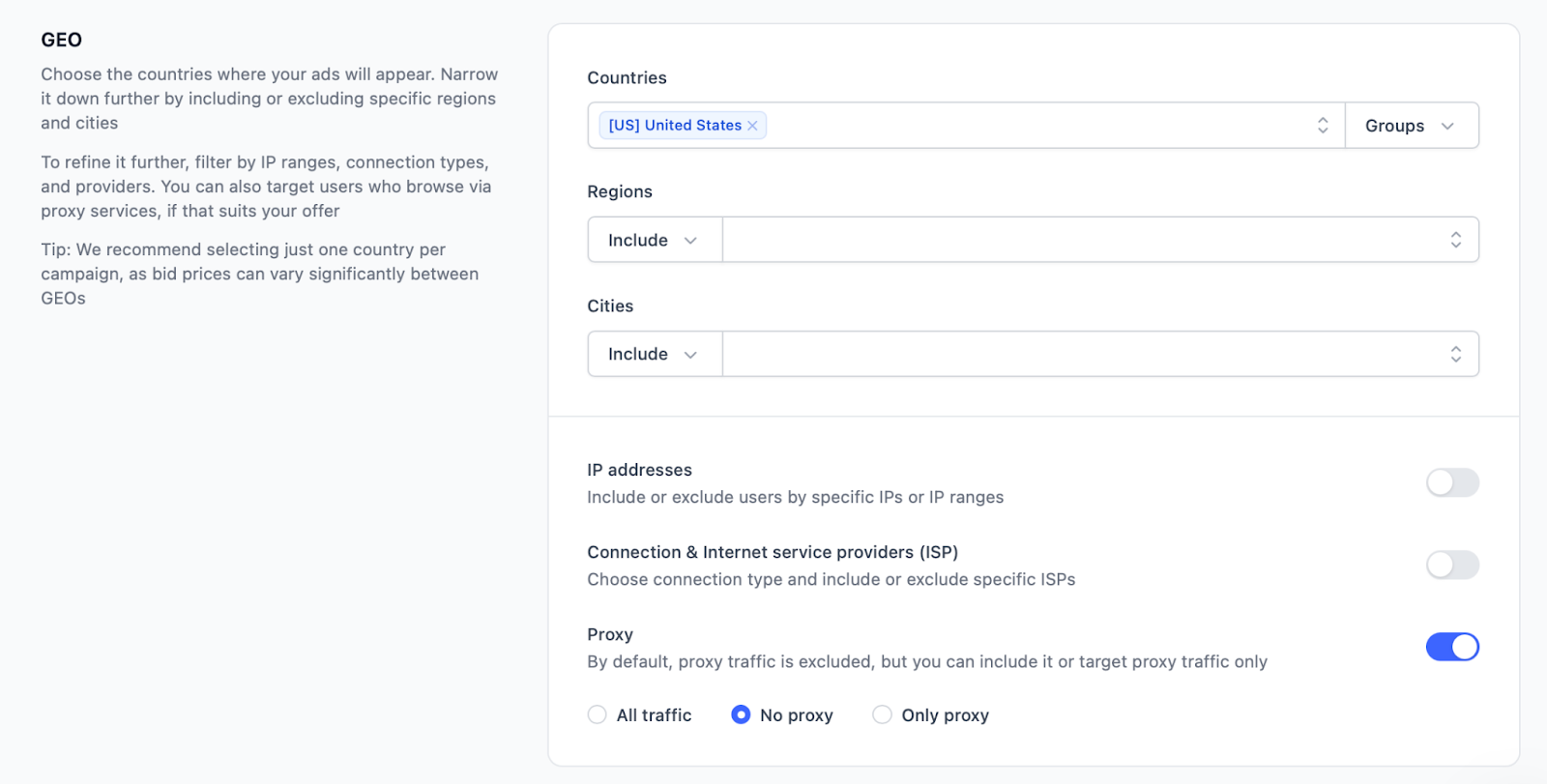
Step 3: We selected the targeted country and disabled proxy traffic.
Step 4: Next, we targeted by device, OS, and OS version—here we simply followed the offer’s requirements.
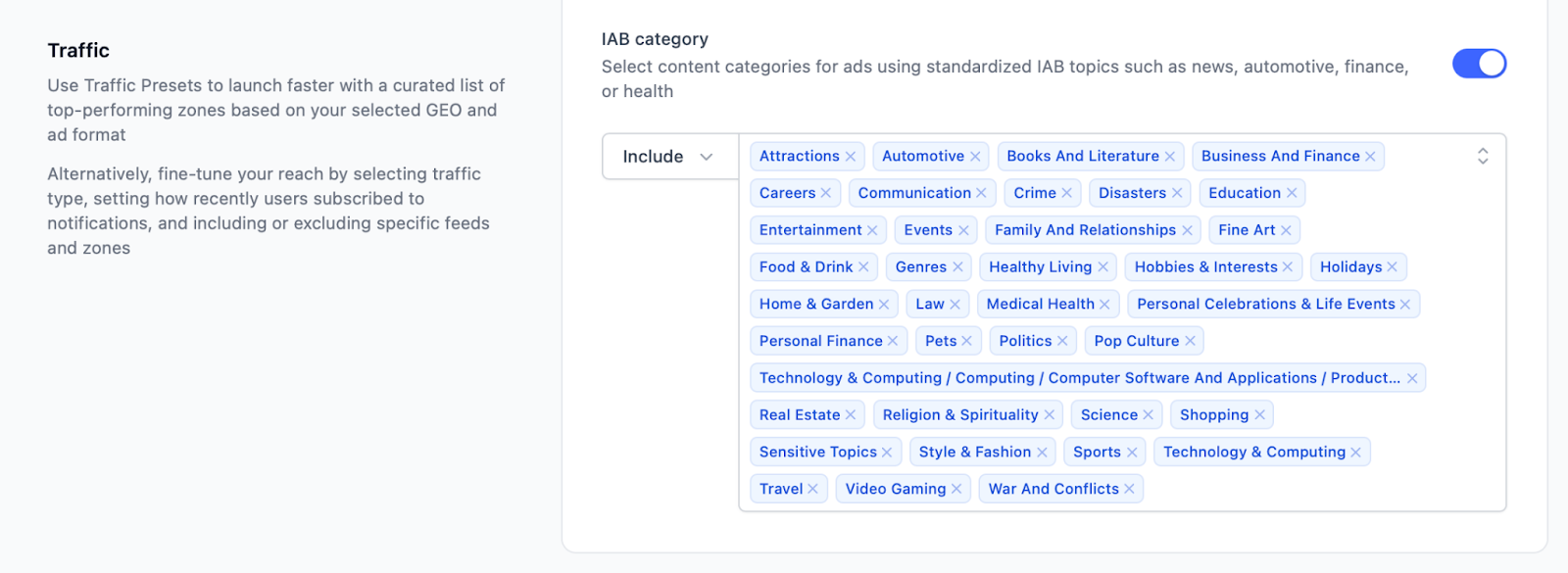
Step 5: Here come the IAB categories. To ensure we could optimize all traffic by IAB categories, we selected all 38 categories from the list. This made it more convenient and faster to disable zones with little to no conversions—but more on that later.
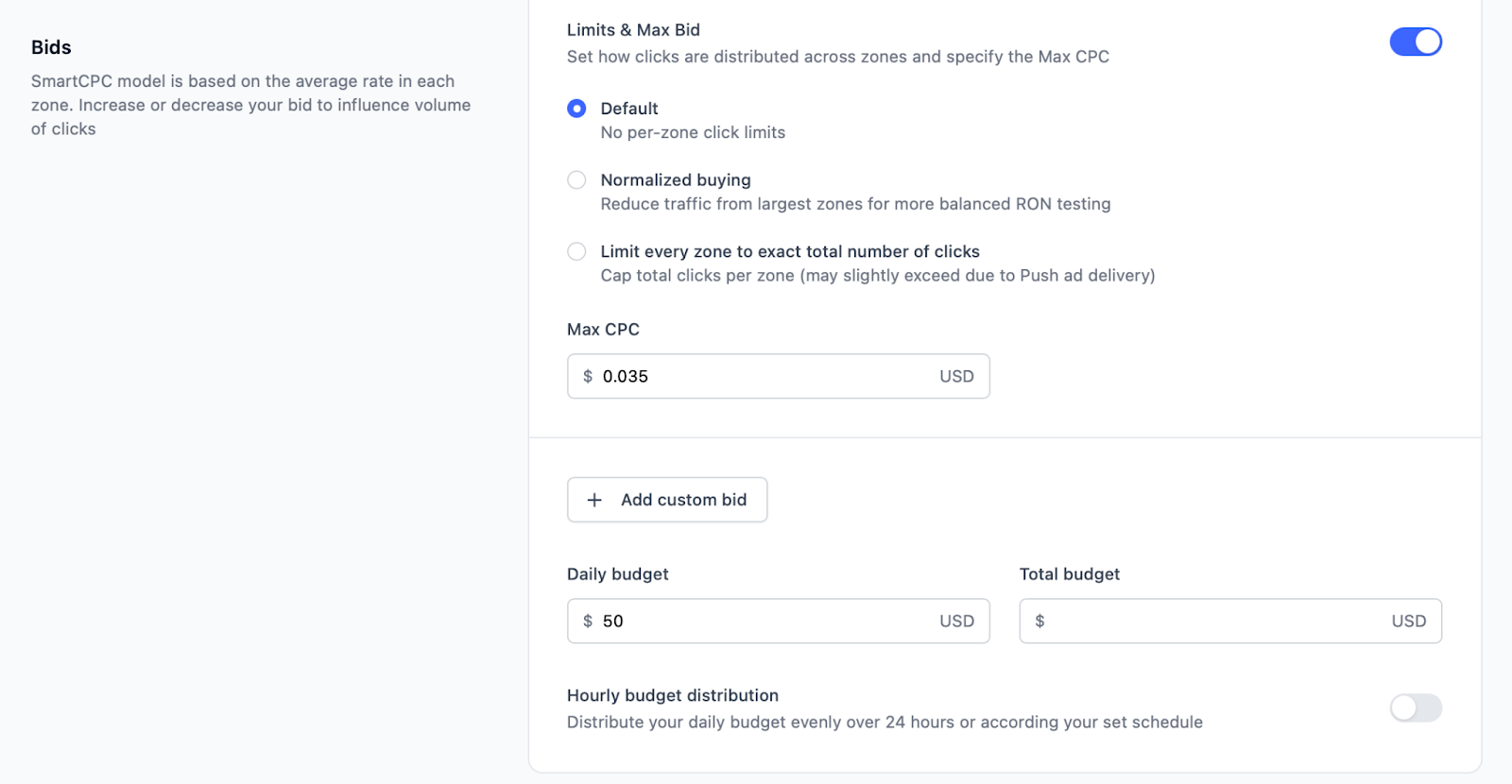
Step 6: Following our manager’s recommendations, we set a maximum CPC of $0.035 (relevant at the time of the campaign launch—it may be different when you read this article) and a daily budget of $50.
Step 7: All that was left was to place a tick in the section confirming that our campaign abides by the Quality Guidelines and submit it for moderation.

Optimization tweaks and tricks
Days 1-2
The first couple of days, we were just closely watching the campaign pick up speed and waiting for the statistics to be gathered so that we had data to work with.
Day 3
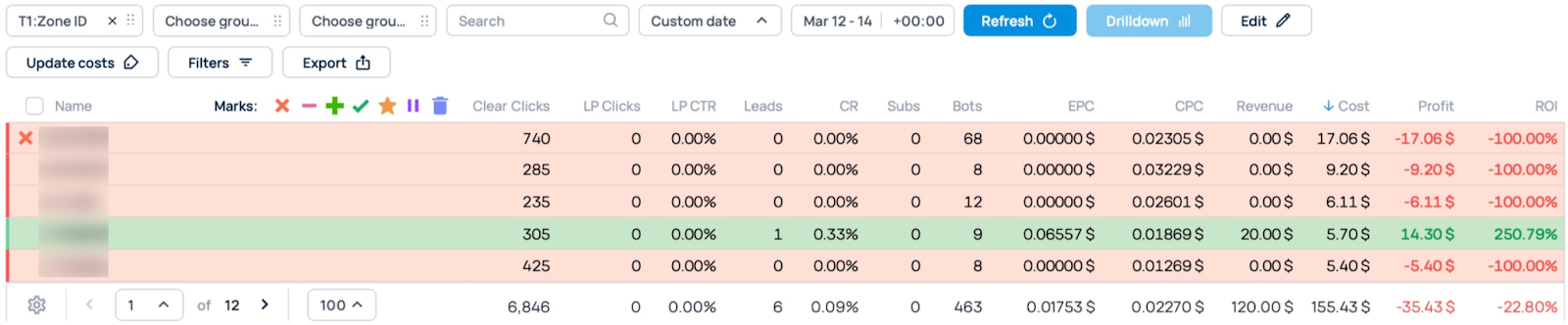
Finally, we got the numbers in hand and got our teeth into fine-tuning the test performance. We blocked a zone that received the highest number of clicks but failed to bring any conversions.
Day 4
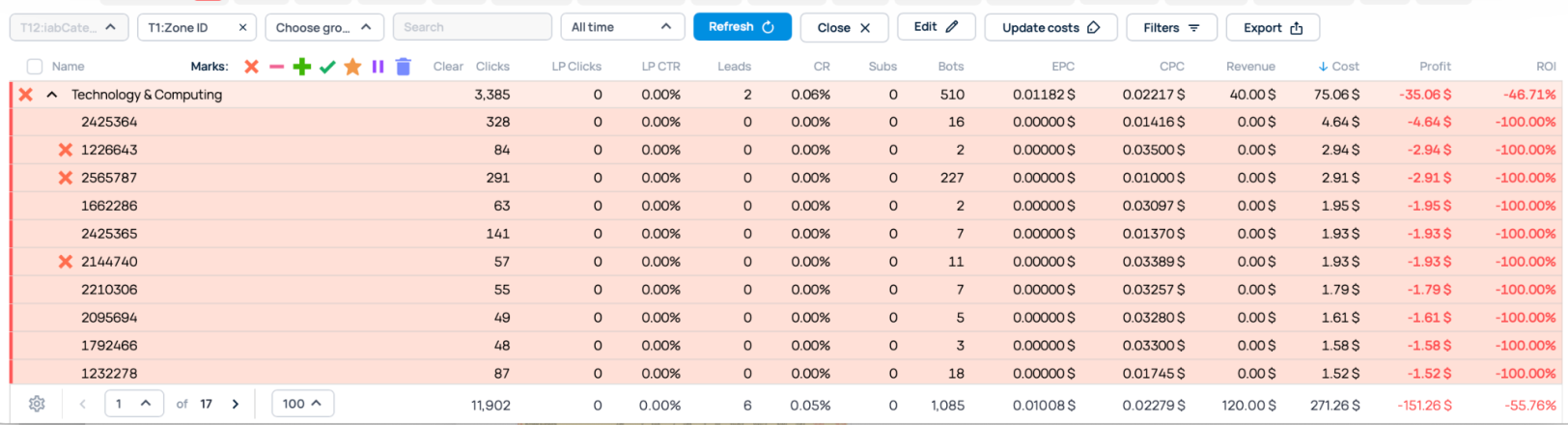
This is where IAB categories started showing their worth. We began analyzing the categories, blocking those that didn’t deliver conversions for the payout specified in the offer.

This category included hundreds of zones that were dragging our campaign down. By disabling it entirely, we saved time and money—otherwise, we would have continued paying for wasted clicks (we had already paid for almost 12K of them).
Day 5
We switched off the second offer, as it was performing much worse than the other one—it was time to let it go.

Also, we didn’t leave the IAB categories to their own devices and continued monitoring and blocking non-converting ones.

Day 6
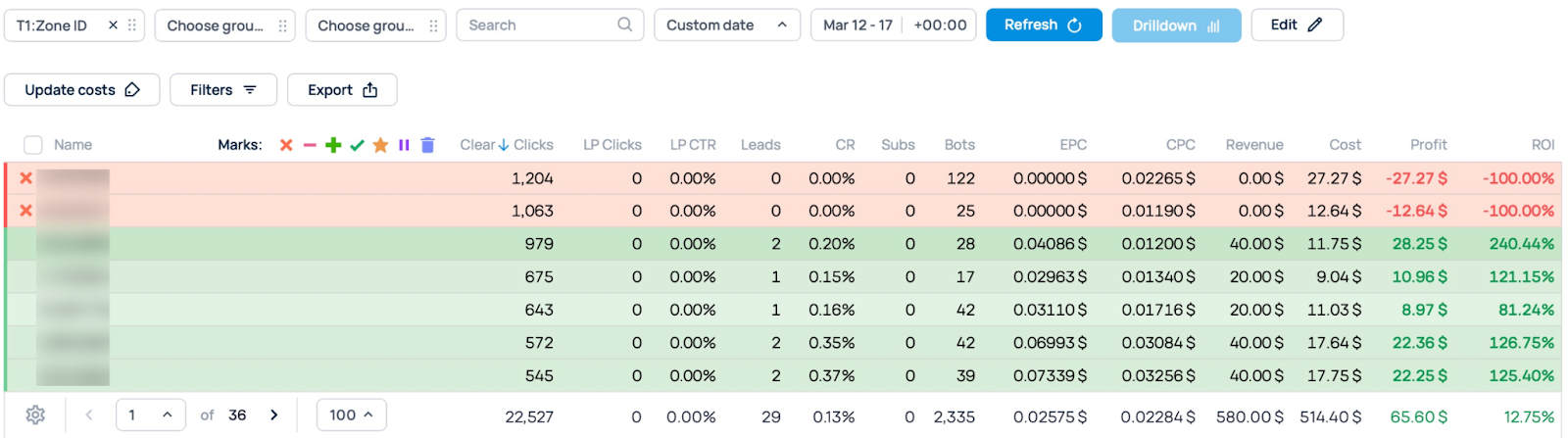
We sorted all zones by the total number of clicks they accumulated during the campaign so we could see the full picture and block those that generated the most clicks without producing any conversions. So, goodbye, underperformers!
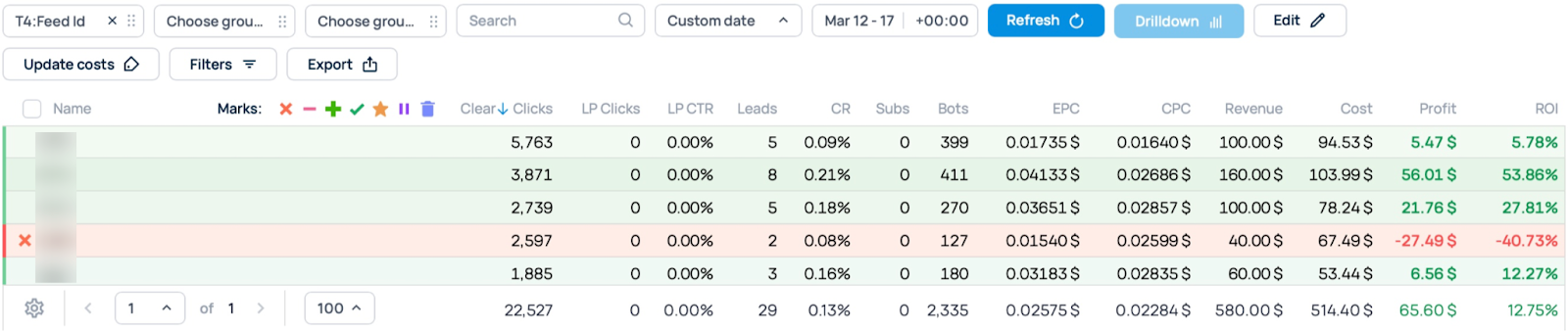
We switched off two IAB categories: one that ended up in the red and another that brought in no conversions. In our case it was Genres and Sports.

And also disables the underperforming feeds.
Day 7
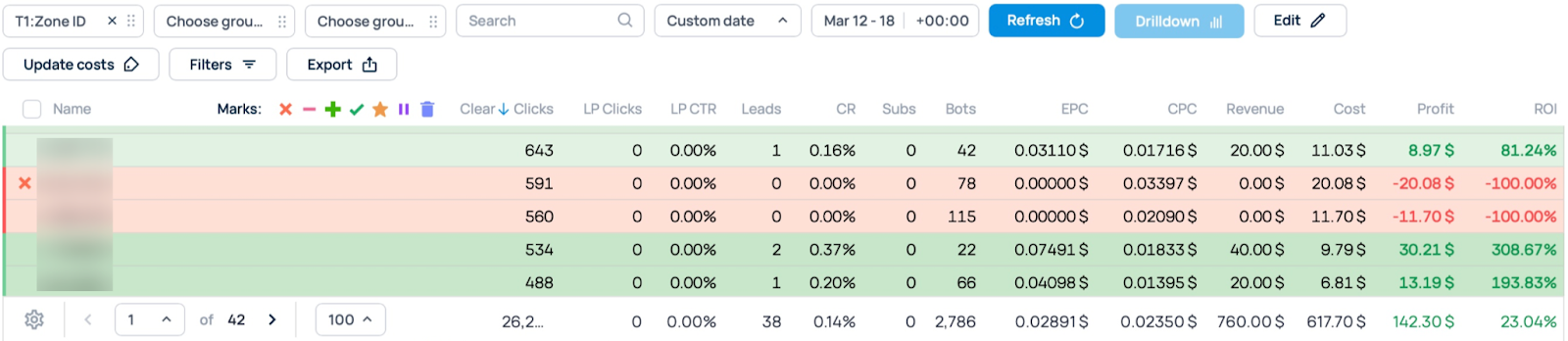
Zones never stop working, and neither should optimization. So we continued fine-tuning zone performance and said goodbye to those that were dragging our campaign down.
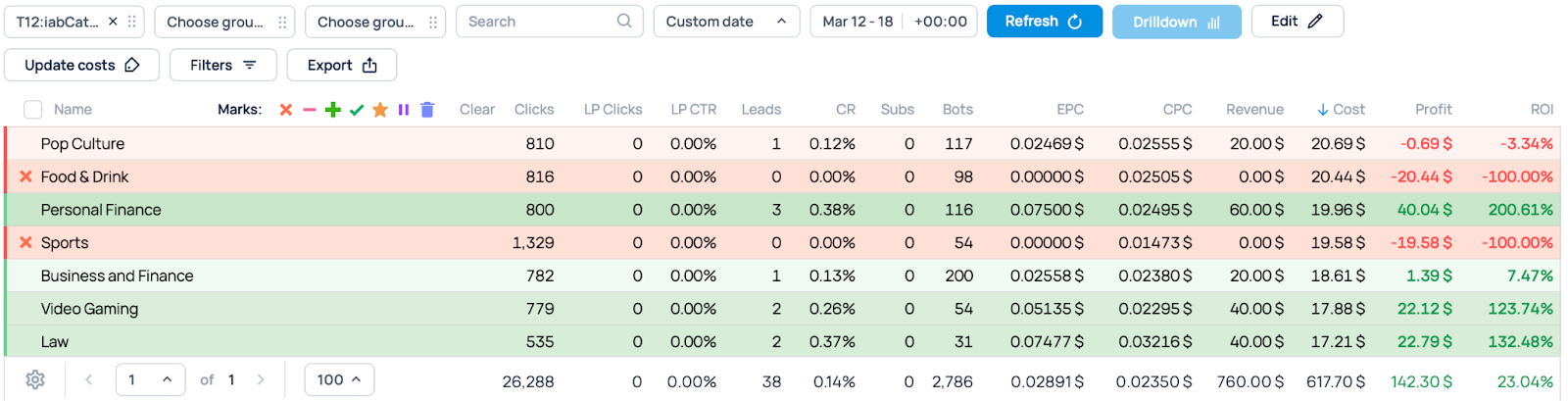
This also applied to IAB categories with no conversions.
Day 8
It was the last day of the campaign, so we collected the data, tallied the numbers, and got ready to show you the results.
RON test results
Our RON test was running for eight days, and here is what we managed to pull off:
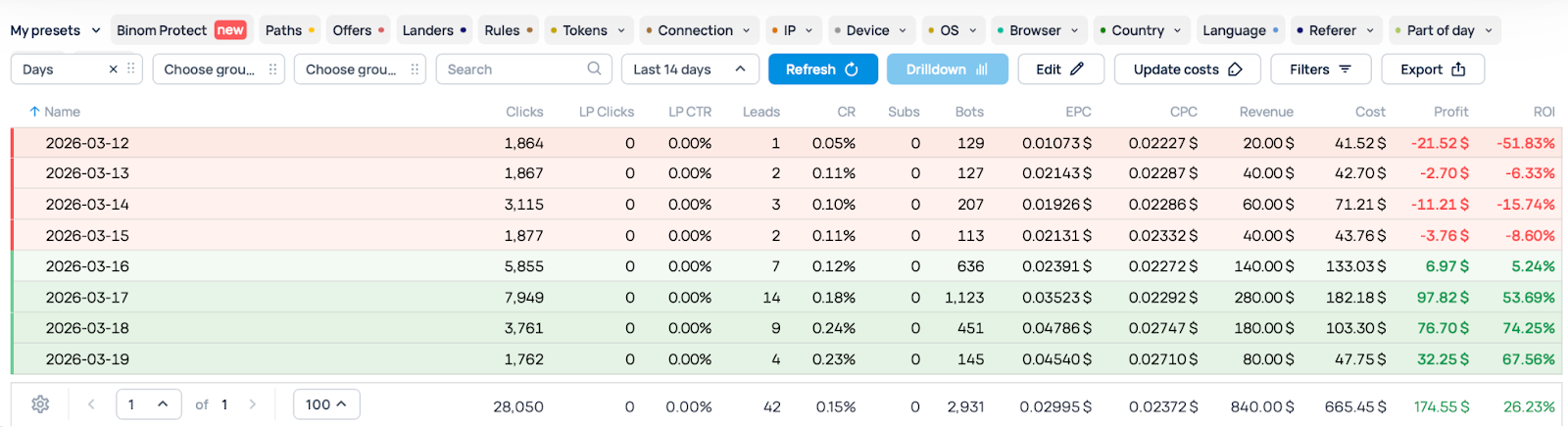
Cost: $665.45
Revenue: $840.00
Profit: $174.55
ROI: 26.23%
Targeting by IAB categories made our optimization much easier and the test profitable. In the end, we not only created a whitelist for further scaling but also earned a 26% ROI along the way.
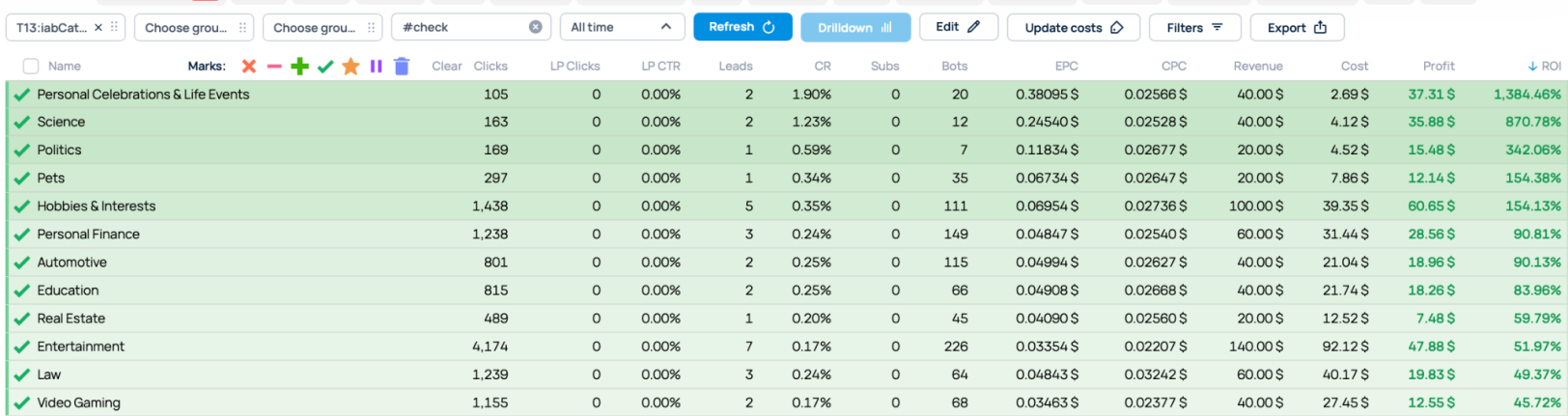
Speaking of the whitelist, here is the list of IAB categories that performed best for our campaign. However, it’s important to understand that this list is not a one-size-fits-all solution—it won’t necessarily produce the same results in your campaign or guarantee higher earnings. As this very case shows, even identical offers on similar traffic can deliver completely different results. So always run your own tests, optimize using IAB categories without hassle, create your own whitelists for scaling, and, as a bonus, pick up profits as you go.
Wrapping up
IAB targeting proved to be a game-changer in our Direct Click RON test. By focusing on categorized zones and feeds, we were able to optimize faster, reduce wasted spend, and concentrate on the traffic that actually converted. Over just eight days, careful monitoring and timely tweaks turned a complex, wide-scale test into a profitable campaign—earning a 26% ROI and producing whitelists of categories, zones, and feeds ready for scaling.
IAB targeting is a powerful tool to make your testing more efficient and your optimizations more precise. But every campaign, audience, and offer behaves differently, so run your own tests, monitor results, and use IAB categories to streamline decision-making.
And if you need help along the way, you know where to find us. Reach out via the in-platform chat or drop us a DM on any of the social networks listed under this article. It’s time to make your campaigns more powerful with IAB targeting!