On November 11, we hosted Domain Disco, our first publisher meetup during Chiang Mai SEO. Around 70 guests, from website owners to people behind digital platforms, joined us at More Than Night for drinks, a photo booth, and plenty of conversations about traffic and domains.
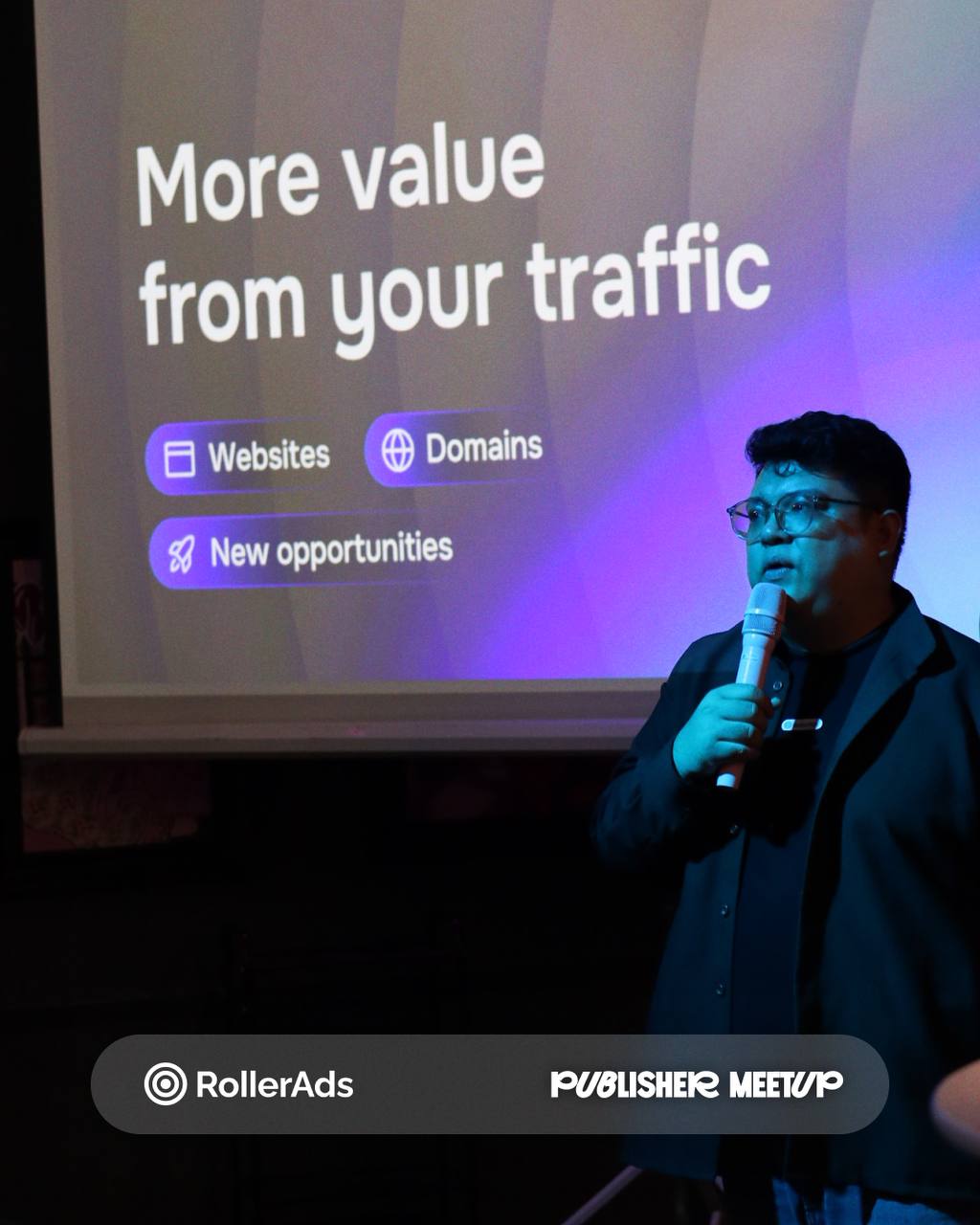
Right in the middle of the evening, Renz Gonzales, our VP of Growth & Partnerships, took the stage. He talked about a question every site owner faces sooner or later. Building a website takes a huge amount of work: content, SEO, development, testing. Once the audience is there, how do you get more value from it, and from the domains you own but aren’t using?
Here’s a recap of his talk for anyone who couldn’t make it, along with a few points Renz didn’t have time to cover on stage.
Push: Another revenue stream from the same audience
Most publishers already have something in place (AdSense, banners, affiliate offers, etc.). Push can sit on top of that and potentially add another 10% on top of your AdSense earnings. That’s all down to traffic and setup.
Push notifications are short messages that get delivered via the visitor’s browser. The visitor has to opt in to be sent these, and once they have done so, you can then reach them even after they’ve left your site. In addition to ad notifications, you can send your own notifications (e.g., a new article has been published, or the latest news). That brings users back to your site and gives your on-site ads more opportunities to earn.
OnClick: A different kind of experience
OnClick works differently from Push. When a visitor interacts with your page, an ad opens in a new browser tab or window, and you get paid for every impression.
Because it doesn’t depend on opt-ins, OnClick can bring in revenue from the whole of your traffic, not just from subscribers. That makes it a good fit for sites with large audiences and lots of daily visits.
At the same time, it’s a separate format with its own logic, so it’s recommended looking at it case by case. How will it work for your audience? How will it fit alongside your current setup, whether that’s AdSense, banners, or Push? Your personal manager can help you answer these questions and plan a test that won’t affect your existing revenue.
Domains with no website still get visitors
The second half of the talk was about domains with no website whatsoever. As Renz put it, “a domain doesn’t need a website to get traffic and earn money”.
- Typo domains are misspelled versions of the sites that people are looking for. You end up on them by accident.
- Expired domains weren’t renewed but still get traffic from old links and bookmarks.
- Regular domains are the ones you own but haven’t got a website on yet.
There’s a whole business around this traffic called domain parking. You buy the domain, you park it, and you make money from the traffic. As long as the traffic has value to the advertisers, it can make money.

How domain monetization works at RollerAds
First you connect your domains (one at a time or in bulk), so you don’t end up with a huge portfolio that takes days to get set up. We support Nameservers, CNAME records, and XML integration, and our team can of course help you work out which is the right one for you. For a closer look at how domain parking works at RollerAds, from integration to monetization, check out our interview with Xinyi.
Then it’s all about monetization. We monetize domain traffic via domain redirect (i.e., rather than seeing an empty page, visitors get redirected to a relevant advertiser’s offer). You get paid for each successful redirect delivered, and no one has to click on an ad on a parking page first.
Where the visitor goes is just as important. We’ll select the right content-safe ads for each domain (eCommerce ads and Search Feeds) and run our own ad rotation to get more revenue from the same traffic.
To keep the ads relevant, we use IAB categories (that’s the standard way of categorizing content by topic). Each domain has a category, and the traffic is then matched to relevant ads (a Finance domain gets financial offers, a Technology domain gets software ads, etc.).
What a domain can earn
It depends on the GEO and the traffic. Here are the highlights to go by.
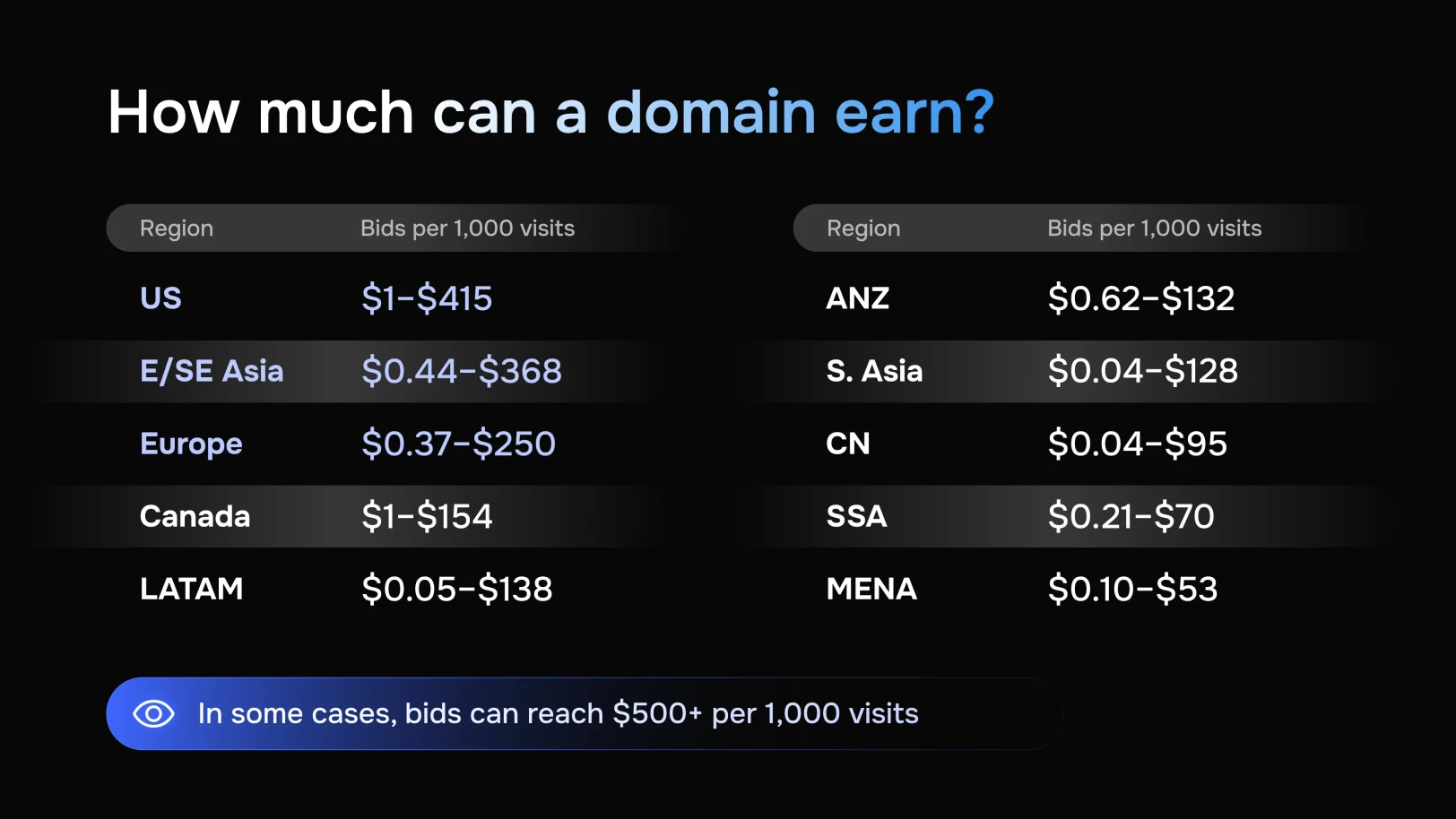
In a handful of cases we’ve had bids go above $500 per 1,000 visits. Not every domain is going to command that, but with quality traffic we’ll be working to get your RPM as high as the demand will allow.
Reports, tags, and selling
Reports come in all day with a very slight delay and you do see the traffic and revenue for each domain and active site. With hundreds of domains though, checking them one by one isn’t really a workflow. It’s just a very long afternoon.
That’s really what tags are for. You add them when you’re uploading your domains (or at a later stage) and then you can filter your stats by acquisition batch, niche, or GEO. Our guide to domain tags will show you how to set them up.
If you’re going to sell, you can actually list domains for sale right on RollerAds. They’ll be earning for you while you’re waiting for a buyer.


Starting with a test
If you’re new to domain monetization, we’ll get you going. If you already work with another provider, we can discuss a test before you make a bigger decision.
We can sit down together, walk through your portfolio (whether domains or content websites), and plan a test that makes sense for your business.
But we also know that having help available doesn’t make switching partners a small decision. It can sometimes mean revenue risks. And we don’t want you to carry all the revenue risk alone.
That’s why, for selected initial tests, we can agree on a fixed revenue commitment. If the test falls below that agreed amount, we cover the difference under the terms agreed upfront. And of course, we work together with you through the setup and the results. Just create a RollerAds account if you don’t have it yet or reach out to your personal manager. See you soon!