
The importance of conversion tracking in affiliate marketing is hard to overestimate. Without proper affiliate tracking software, privacy updates, rising ad costs, and high competition will simply eat up your budget before you have a chance to see any results.
In our article, we will go over why exactly tracking is so important, what tracking options there are on the market right now, and finally share our recommendations on the best affiliate tracking tools in 2026.
Affiliate tracking explained
More often than not, newcoming affiliates wonder how affiliate tracking works and why bother at all? Well, to put it simply, affiliate tracking is essential for identifying the best audience segments for your campaigns. From the very first ad impression to the moment someone actually buys, signs up, or fills out a lead form, tracking provides the data you need to meet your KPIs and beyond.
Yes, you can work without tracking, but there are a few problems associated with it. Even if you don’t care about recurring purchases and RevShare, the market still favors narrow targeting settings and specialization. Without precision, you are bound to spend more on your campaigns than your competitors. It’s a fast way to burn through your budget.
Tracking helps detect seasonal patterns, monitor user behavior, highlight weak points in your funnel, and build whitelists for further scaling. With the help of a good tracker, one can, for example, figure out that their creatives get the clicks but users bounce off midway. This might be a sign of misleading messages, slow-loading pages, or something else, but the main thing is that the creatives themselves capture attention and drive impressions. Therefore, it’s easier to locate the problem and fix it with the help of tracking.
Affiliate tracking types: Postback, S2S, pixels
Those are the general principles of tracking, but there are different methods of execution. If you’re still leaning purely on cookies in 2026, you’re basically leaving 20–40% of the data behind. Safari and Firefox blocked third‑party cookies ages ago, and Chrome joined the club not long ago. Users are more tech-savvy, so any method that relies on storing data in their browsers becomes less reliable.
So, if not cookies, then what? Well, there are two main methods you’ll run into.
The first being postback. Postback tracking in affiliate marketing is still one of the most trusted approaches. Instead of relying on users’ browser, the conversion data gets sent directly from the network or offer page back to your tracker via a server call. This makes it much more stable.
The real key is mastering postback URL setup. When done correctly, your tracking links set up fires conversions instantly and let you optimize campaigns in real time. If you don’t know how to set up postback, visit our dedicated article where we have mapped out every step for your convenience.
Occasionally, you might encounter Server-to-Server (S2S) tracking, also known as Server-to-Server integration. That’s just another name for Postback tracking. But if you’re into nitty-gritty details:
- S2S is the general, overarching technology of connecting servers.
- Postback is the specific action or message sent from the advertiser’s server to the traffic source’s server, confirming a conversion.
The second method is pixel tracking. You drop a small 1×1 invisible image/tag on the page of your choice. Pixel tracking in affiliate marketing is one of the oldest methods, allowing for bypassing browser restrictions on tracking, making it a superior choice to cookies.
Best affiliate tracker tools
After testing and comparing what’s out there, here’s our honest look at the strongest players in this year’s tracking software comparison.
BeMob
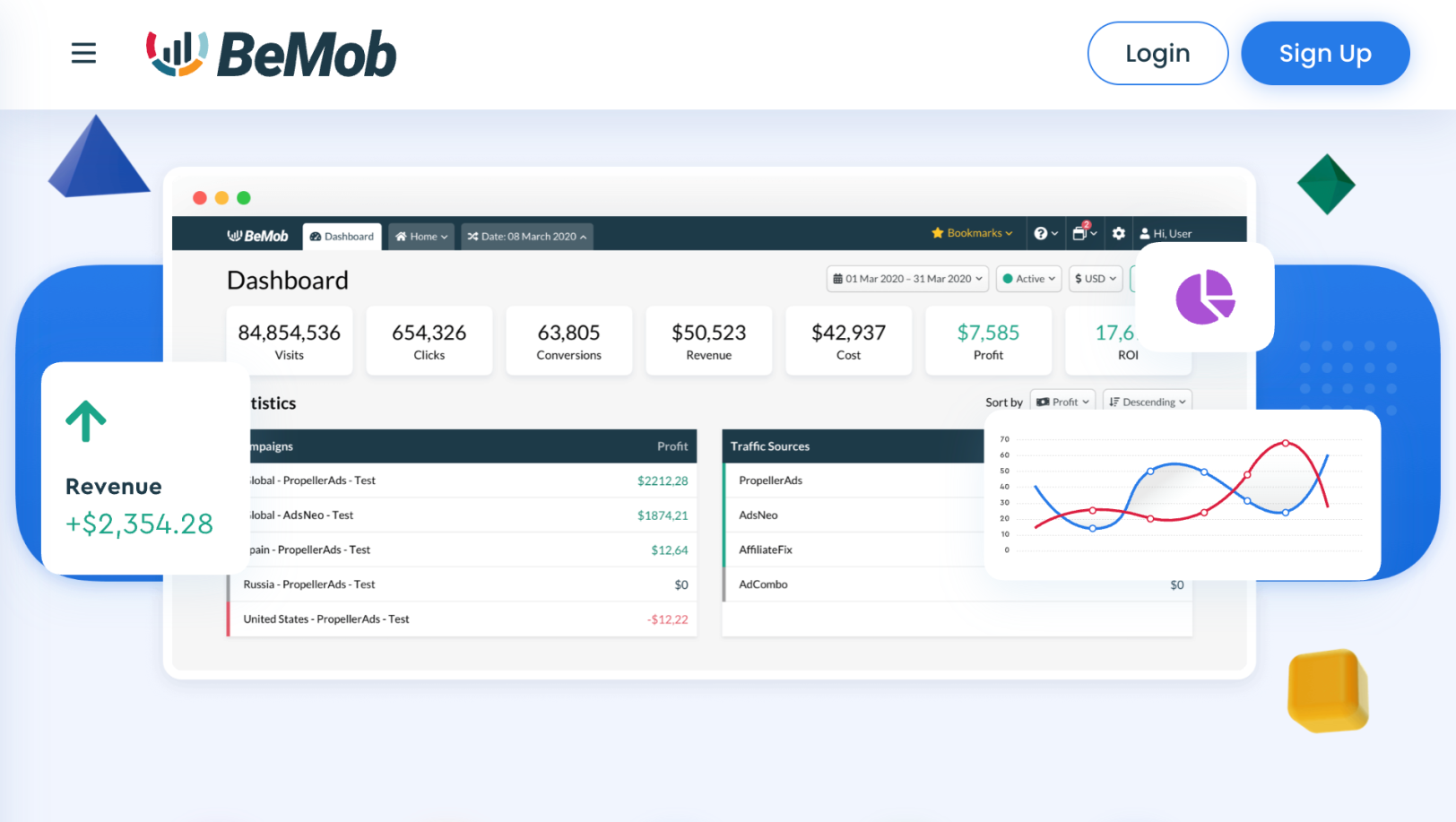
BeMob remains a favorite for many affiliates thanks to its clean interface and generous free tier. It’s especially good if you want something cloud-based that doesn’t require babysitting servers. Great for tracking multiple traffic sources and setting up solid postback tracking without too much hassle.
Keitaro
Keitaro is a powerful and flexible solution. It doesn’t matter whether you run it locally or in the cloud, because Keitaro handles heavy loads and gives you advanced filtering and routing options. Media buyers who love customization and speed are likely to appreciate Keitaro for complex S2S integration affiliate setups.
Voluum

Voluum has been popular among the affiliates for years, and for a good reason. This tracker offers exceptional automation, real-time stats, and strong team collaboration features. Voluum is still one of the best affiliate tracking software options available in case you’re running big campaigns and need advanced reporting, as well A/B testing tools.
Binom
Binom is a self-hosted and lightning-fast tracker, built to handle insane traffic volumes on a single server. When you want maximum speed, control, volume, and literally everything, Binom is your go-to. The interface might look a bit austere, but if you set it up properly, you’ll fall in love with it. If you know what you’re doing and hate paying per-click fees, Binom is hard to beat.
AIO.Tech
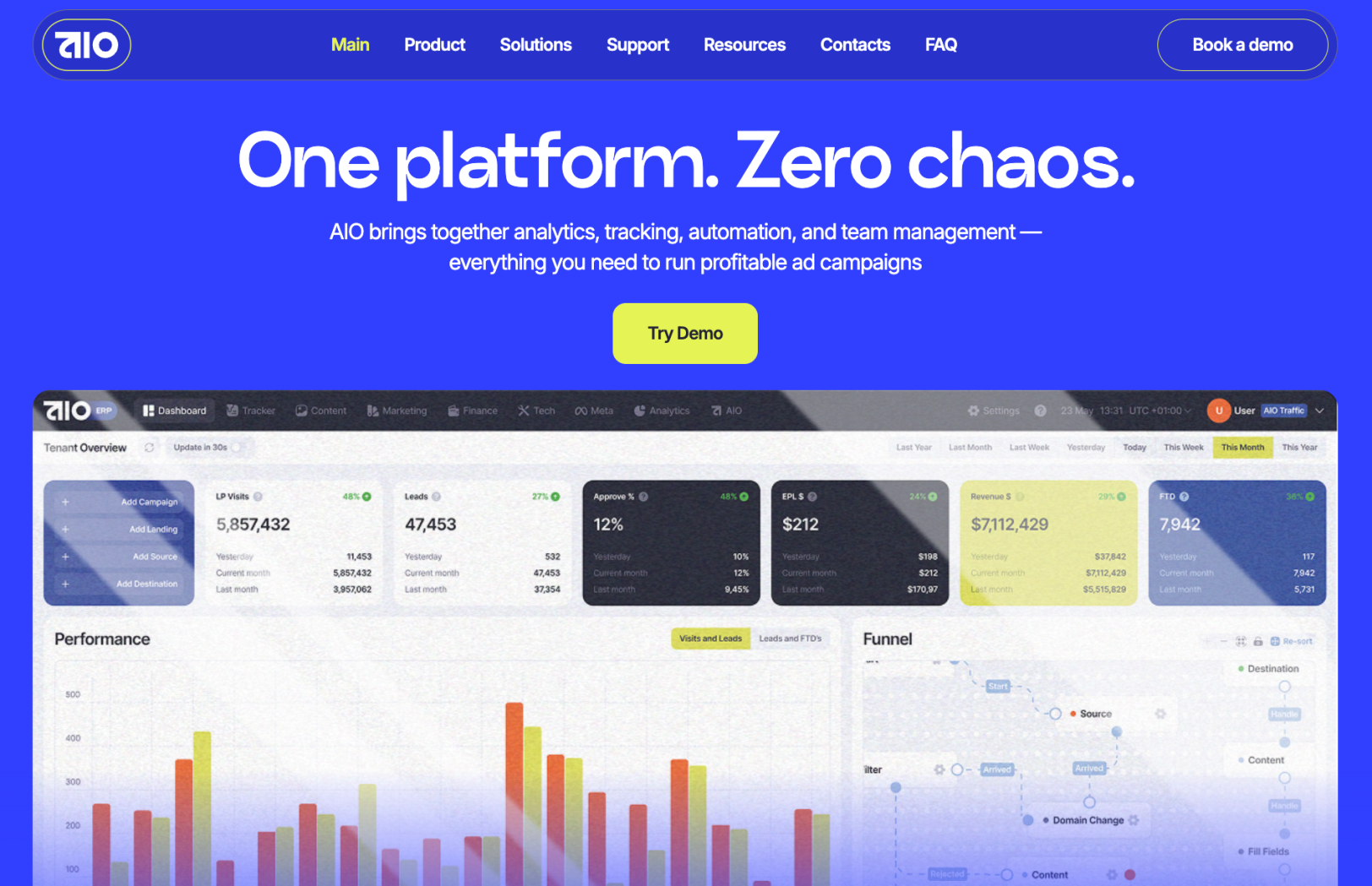
AIO.Tech is an AI-powered affiliate tracking platform built for media buyers who want deeper automation and smarter optimization. The tracker combines real-time analytics, campaign management, traffic distribution, and anti-fraud tools in one interface, helping affiliates optimize performance faster and manage multiple traffic sources more efficiently.
RedTrack
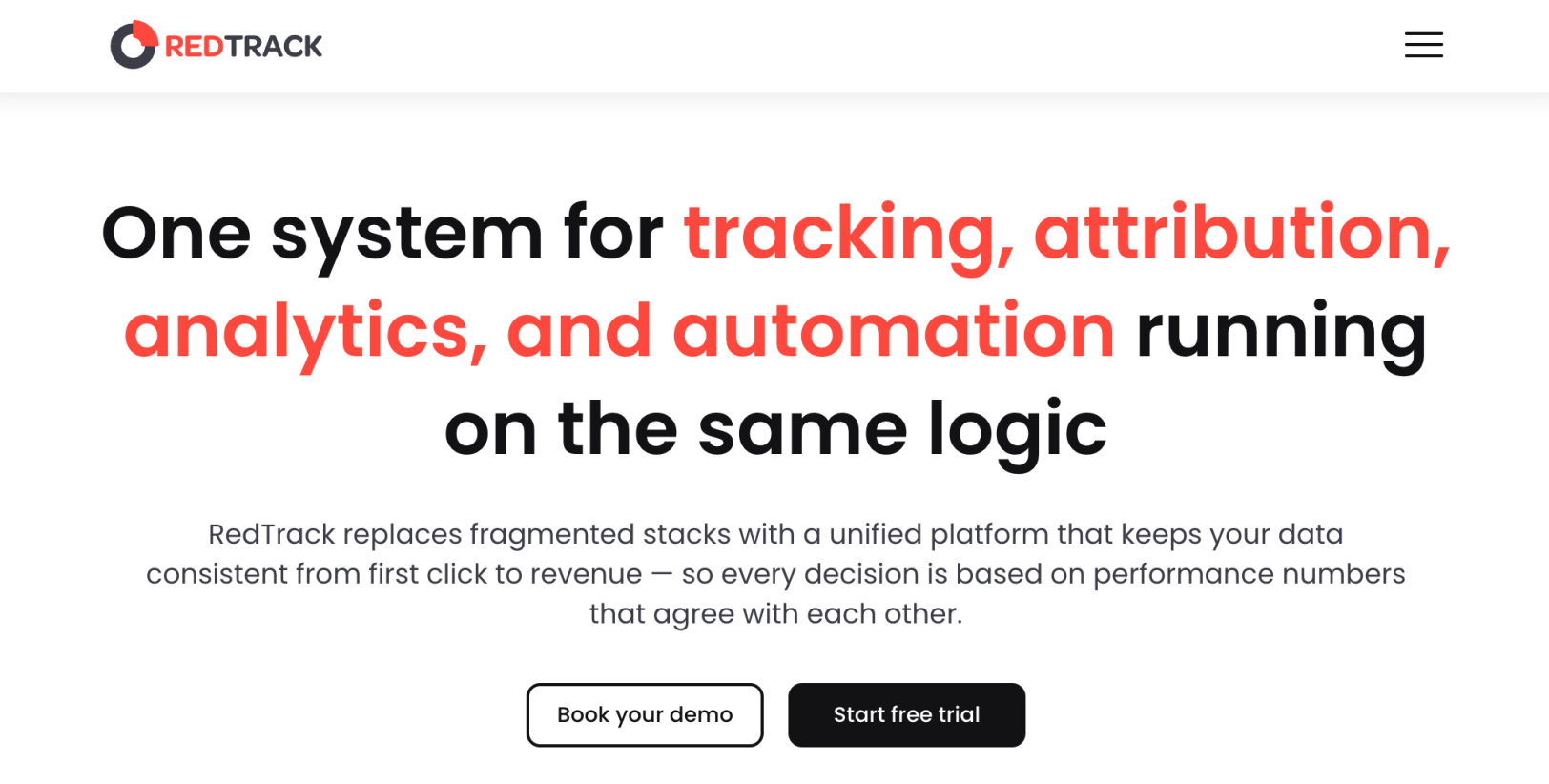
RedTrack stands out for its focus on first-party tracking and accuracy in tough privacy conditions. The dashboard feels modern and easy to navigate, and it handles multi-step funnels really well. A strong all-rounder in any best affiliate tracker tools list.
PeerClick
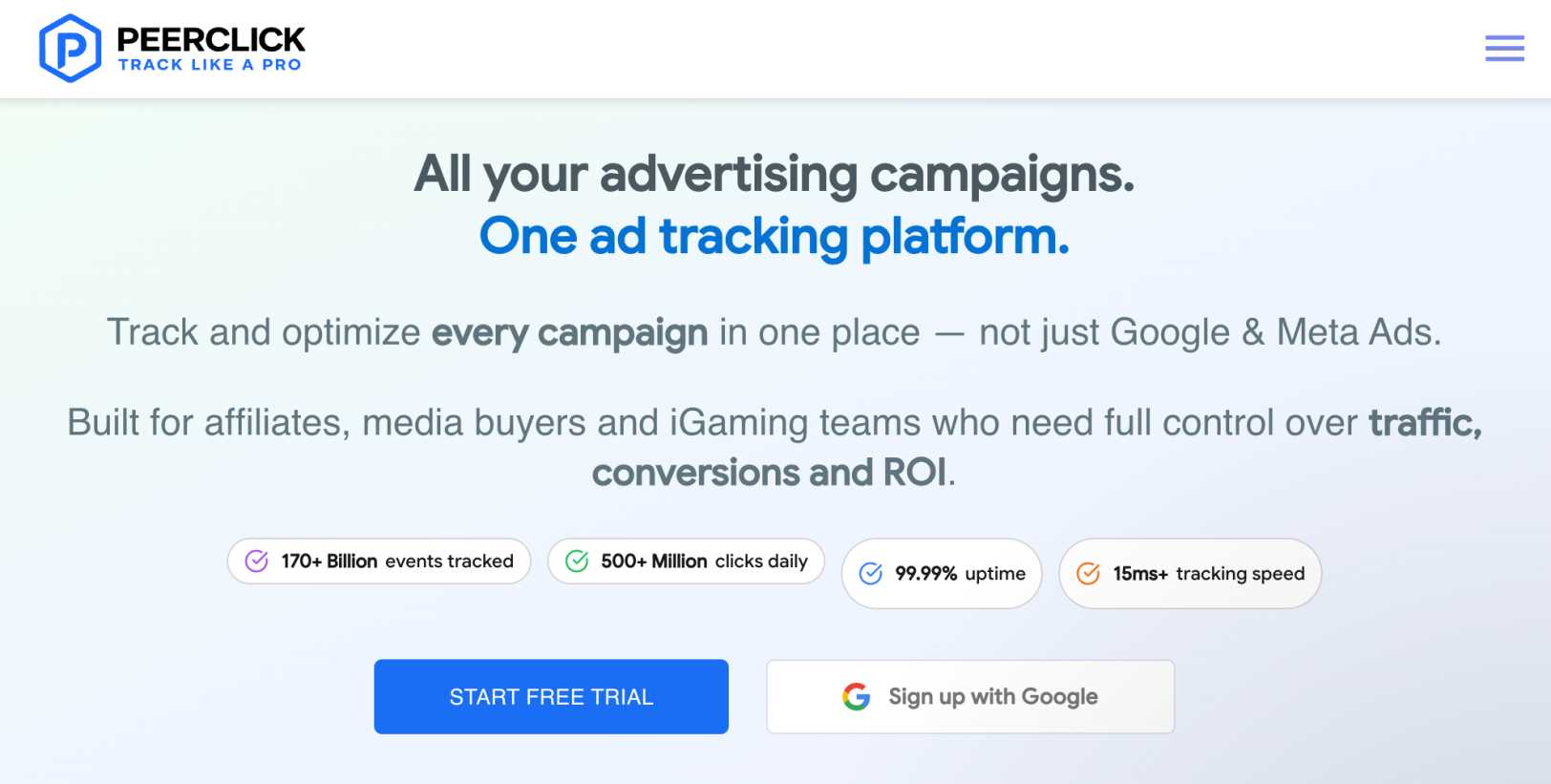
With PeerClick, affiliates can monitor the full campaign funnel—from clicks and conversions to custom events—while breaking down performance by placement, GEO, device type, creatives, and campaigns. The platform also includes A/B testing, automated optimization tools, bot and fraud filtering, plus integrations with major traffic sources such as RollerAds.
Closing words
Affiliate tracking might not be a necessity, but it just makes marketing life easier. Without it, there’s no specialization, no cost-efficiency, and no retargeting.
While the definition of the best affiliate tracking software can vary, we’ve compiled 7 examples that have proven their efficiency over time. Pick any you like, or go with your own unique option. But no matter the case, tracking software is one of the best investments you can make.
Having picked up your tracker, you need to integrate it into our platform. This is where our postback guide will walk you through the setup process without overload. And remember, we’re always here to assist. Just register on our platform, if you haven’t yet, and let’s get to work.